Field notes: the portfolio that lost forty kilowatts to a tenant's new rooftop unit
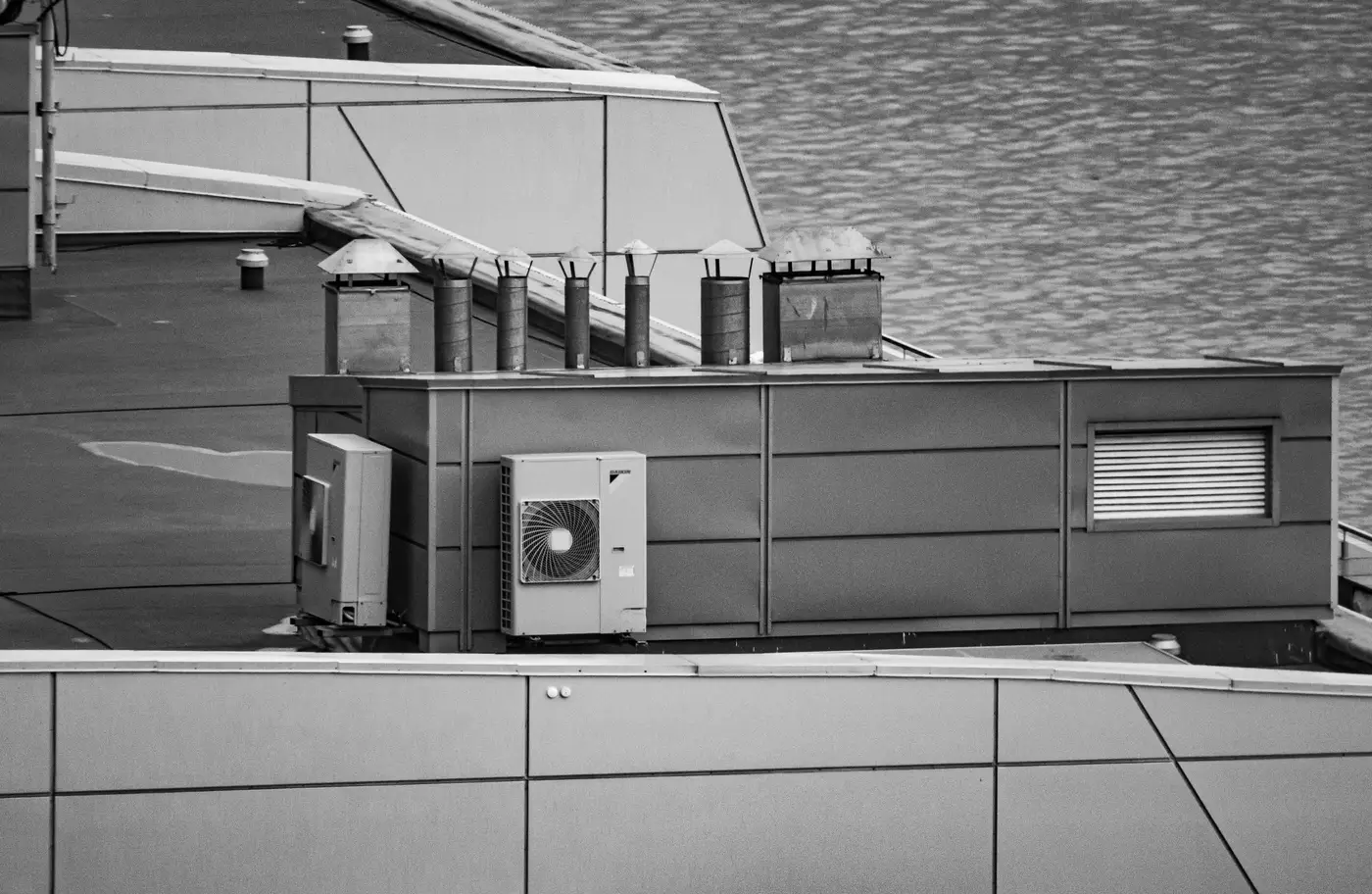
A developer we talked to this fall had a twelve-site distribution portfolio scoped and priced, ready to go into a PPA bid package. The desk screen was done months earlier: rooftop imagery pulled, usable area marked off, orientation checked, the usual shading allowances for parapet walls and existing mechanical clusters. Site by site, the numbers rolled up into a portfolio total that the finance team had already started modeling against offtake rates.
Then the site-visit crew got to building seven and the number didn't match. Not by a rounding error, by forty kilowatts.
What happened was ordinary and completely unremarkable, which is exactly why it matters. The tenant in building seven had swapped out an aging packaged HVAC unit sometime between the original desk screen and the walk-down. The new unit was bigger, set on a taller curb, with a wider service clearance stamped into the lease amendment nobody on the solar side ever saw. None of that shows up in a property record. It shows up on the roof.
By the time the crew caught it, the array layout for that building had already been roughed into the bid model. The racking plan assumed a clean run across the south-facing field that the old unit barely touched. The new unit, and the clearance zone around it, sat right across that run. Forty kilowatts of installable capacity, gone, on a building that had been treated as one of the stronger sites in the portfolio.
This is the part that doesn't get talked about enough in how C&I portfolios get screened. A single desk pass, done once, freezes the roof in time.
Tenants re-roof. They add or retire condenser units. They install fall-protection rails, new vents, satellite dishes, the odd equipment pad that eats into exactly the area you were counting on. None of it is dramatic on its own. All of it moves the installable number, building by building, in ways that only show up again if someone looks at the roof again.
The developer's team settled on treating the desk screen as a deliverable with a shelf life, something reissued on a schedule rather than locked in once at kickoff. The portfolio gets re-ranked on a fixed cadence, and the sites that moved get flagged before they go anywhere near a bid number. That routine would have caught building seven before the racking plan did.
It's also, not coincidentally, close to what Rooftop Solar Suitability is built to do for a multi-site portfolio: run a fresh high-resolution pass over every roof and canopy once a year and hand back installable kWp per site, not a static square-footage estimate from whenever the portfolio was last screened. A roof that loses forty kilowatts to a new rooftop unit doesn't send a memo. It just sits there until somebody with a tape measure or a fresh image finds it.
The developer's portfolio still cleared the bid, as it happened. Building seven came in lower, three other sites came in a little higher than the original screen had them, and the total landed close enough to the first estimate that nobody panicked. But the team now treats every site in that portfolio as a number with an expiration date, not a fact fixed at the time of the first screen. Roofs change whether or not anyone's watching them, and a portfolio that gets re-ranked once a year catches that before the bid does.
If your own portfolio hasn't been re-screened since the last round of tenant improvements, it might be worth finding out what's sitting on those roofs now.