How to flag ponding water risk when scoring a roof for solar, before a site visit
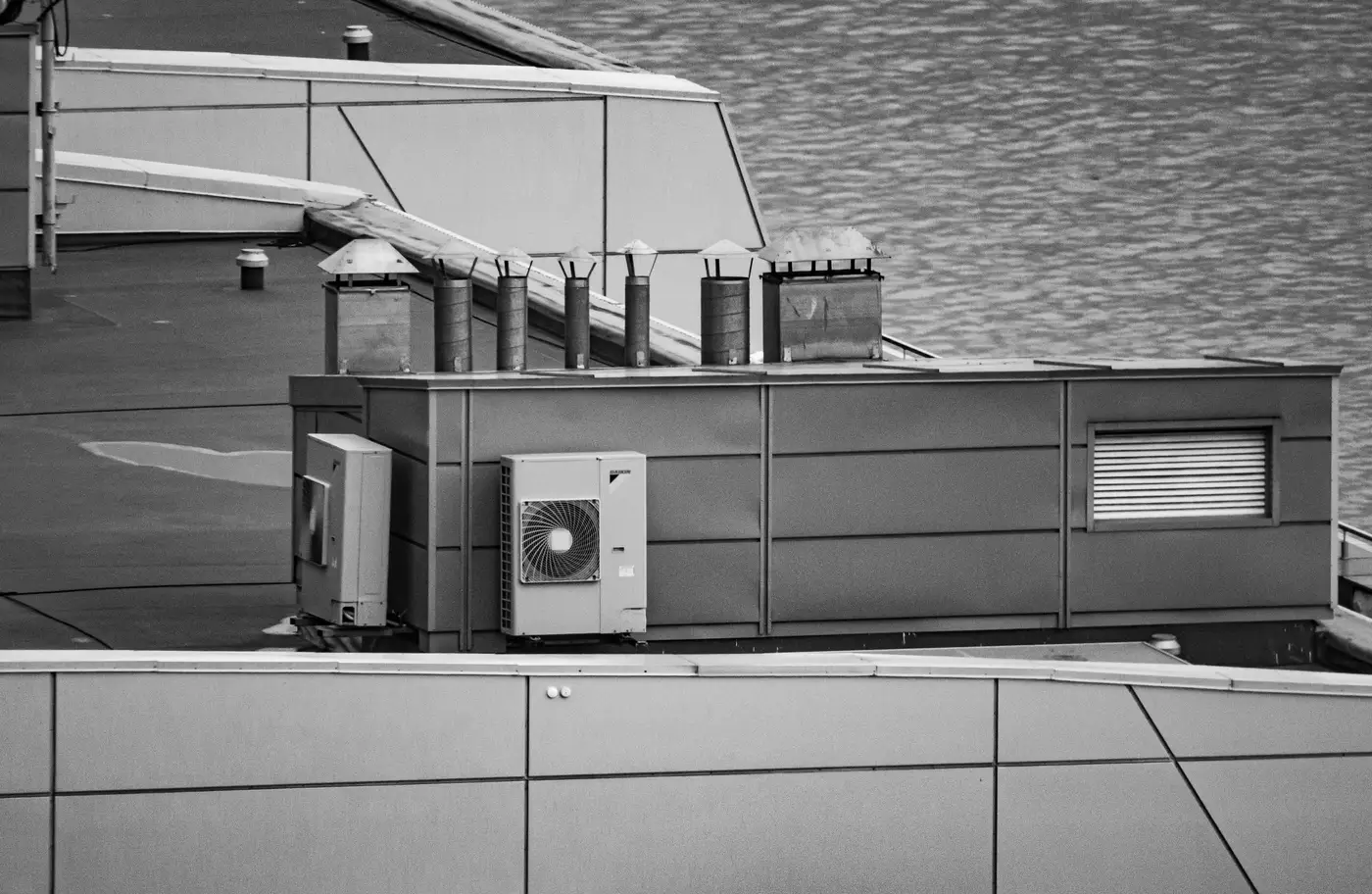
Ponding water on a low-slope roof shows up in two places during a solar scope: the structural calc and the racking layout. Neither of those gets solved from a desk, but the risk itself can be flagged there, and it should be, before anyone drives out to look at a roof that was never going to pencil anyway.
A roof that holds water after a storm is carrying extra dead load every time it rains, and a ballasted racking system adds to that load right where the water already wants to sit. If a structural engineer later finds the roof can't take the ballast ratio a developer wanted, the project either moves to a mechanically attached system, drops panel count, or gets killed. Catching the ponding signal at the desk stage means that conversation starts before a crew gets scheduled.
What ponding actually looks like from the desk
Most of this doesn't require field data. On a roof with real drainage problems, the tells usually show up in a current aerial or VHR image:
- Discoloration rings or dark patches away from drains and scuppers, darker than the surrounding membrane
- Algae or dirt buildup concentrated in low spots rather than spread evenly across the field
- Standing water itself, if the image was captured within a day or two of rain
- Ballast or gravel pushed into drifts around low points, on roofs that use ballast for wind uplift
None of these confirm a structural problem on their own. A dark patch can be a patched membrane section, a mechanical unit's shadow, or a roof that was re-coated unevenly. What a desk review is actually doing is sorting a portfolio into "looks fine, no particular concern" and "worth a closer look before anyone writes an LOI." It's a sort, not a final call on drainage.
Where this fits in a portfolio first pass
On a single roof, this is a five-minute visual check. On a portfolio of forty or four hundred roofs going into a PPA bid, it's the kind of check that gets skipped under deadline, which is exactly when it should ride along with whatever else is already screening the portfolio.
Rooftop Solar Suitability scores every roof and canopy in a portfolio for usable area, orientation and obstruction from a single annual VHR pass, and hands back installable kWp per site instead of a raw area total. That's built for the ranking question: which sites clear the bar on space and shading before a bid goes out. A drainage certification is a separate scope, done by a roofing consultant or structural engineer on the roofs that make the shortlist. Pair the kWp ranking with a quick visual pass for ponding signatures, and the site-visit list that comes out the other end is shorter and a lot more useful than one built off square footage alone.
A roof with plenty of installable kWp and a ponding ring around every drain is still worth a visit. It's just not worth putting at the top of the stack, ahead of forty cleaner roofs carrying the same kWp number.
A quick gut check before the walk-down
If a roof shows two or more of the signs above, move it down the visit queue instead of off it entirely. Order site visits so the roofs with the cleanest desk read go first, since those are the ones most likely to convert to actual installs on schedule. Let the ponding flags sit later in the queue, where a roof consultant can confirm whether it's a membrane issue, a drain blockage, or just a low spot that's always drained slowly without ever causing trouble.
Ready to see a portfolio ranked by installable kWp before the next round of site visits goes out.