How to screen out HVAC units and skylights when scoring a roof for solar
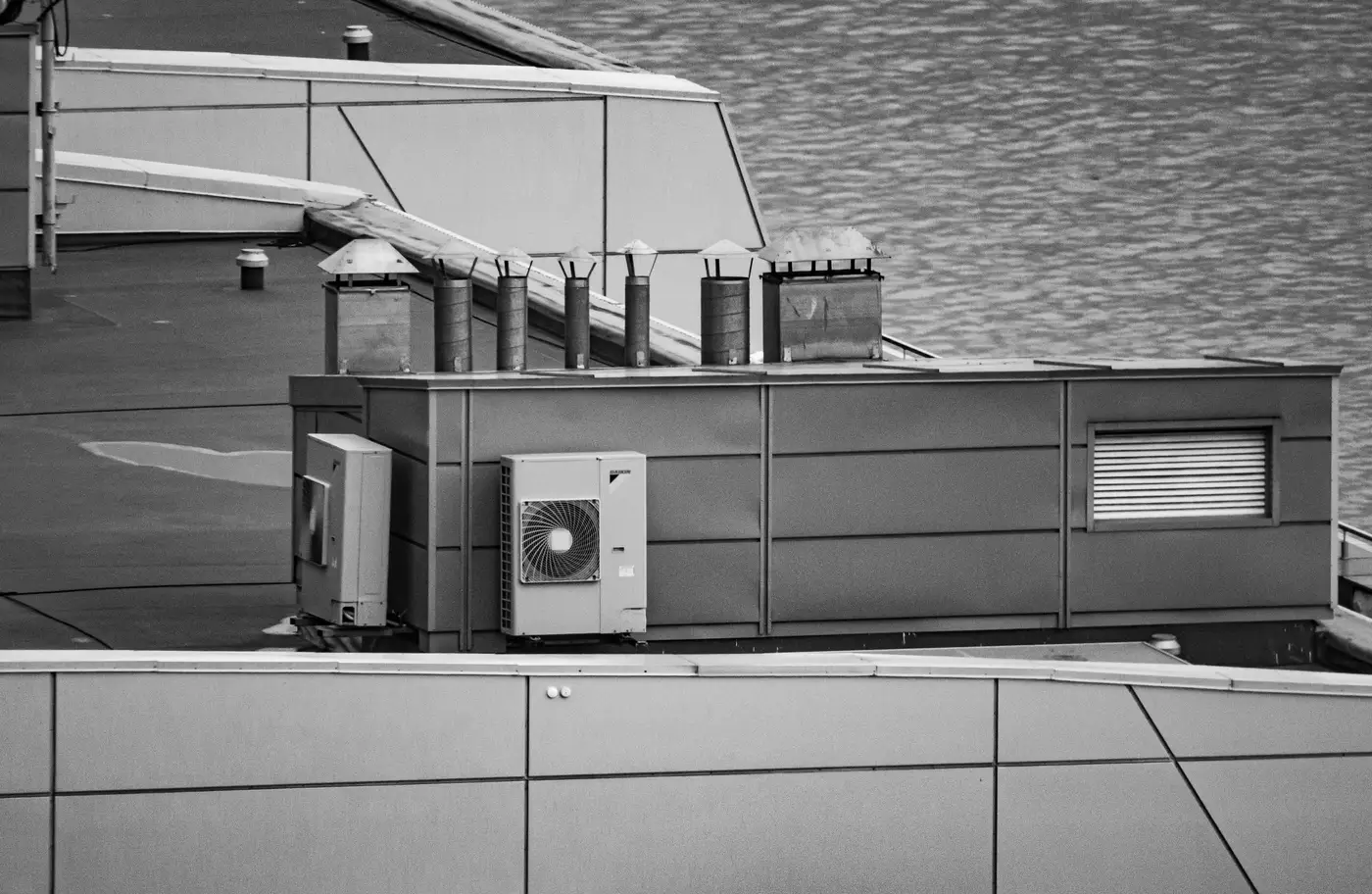
A roof that measures 40,000 square feet on the tax assessor's record rarely has 40,000 square feet of usable array space. Condenser units, skylights, roof hatches, exhaust stacks, satellite dishes and the parapet itself all eat into that number before you've drawn a single module layout. Score the roof on gross area and you'll overstate installable kWp on half your portfolio, which is a bad place to be when you're pricing a PPA off that number.
Why gross square footage lies to you
Most desk screens start with a footprint pulled from GIS or an assessor file. That footprint is the building outline, not the roof plane that's available for panels. Rooftop HVAC package units alone can take a chunk out of a flat commercial roof, and warehouses with clerestory skylights or ridge vents lose usable area in long strips rather than one clean cutout. Add roof hatches, mechanical screens, existing conduit runs and any future-expansion pad the facilities team has reserved, and the gap between gross and net area on a given site can run from negligible to severe depending on building type. A big-box retail roof with a rooftop unit every 30 feet scores very differently than a tilt-up warehouse with a clean deck.
If you're ranking fifty or two hundred sites for a bid, that gap is the whole exercise. A site that looks like a top-ten candidate on footprint alone can drop out once you net out obstructions, and a site that looked marginal can move up because its obstructions are small and clustered instead of scattered across the plane.
What actually counts as an obstruction
For scoring purposes, an obstruction is anything that takes array-eligible roof out of play, including equipment that only reaches the roof through a setback rather than sitting directly on the deck. That list includes:
- HVAC condensers, package units, and the ductwork or curbs around them
- Skylights, smoke vents, and roof hatches
- Exhaust fans, flue stacks, and plumbing vents
- Satellite dishes, antennas, and existing solar thermal or PV
- Parapet walls and roof edges, which also set your perimeter setback
- Walkway pads and existing rooftop screening
Each of these also carries a setback, not just a footprint. Fire marshals and local AHJs generally require clear access pathways around rooftop equipment and along roof edges so crews can service HVAC units or fight a fire without climbing over panels. Those access paths and the rapid-shutdown clearances that come with them subtract more usable area than the equipment's physical footprint does, often by a wide margin on a roof with a lot of small scattered units. A roof scored on raw obstruction footprint without setbacks will still come in too optimistic.
Manual screening doesn't scale across a portfolio
Walking every roof with a tape measure and a site plan works fine for one building. It falls apart once you're scoring a portfolio, because someone has to pull roof plans (if they exist and are current), identify every piece of mechanical equipment, apply setbacks by hand, and then do it again for the next thirty sites before a bid deadline. Roof plans also go stale. A tenant adds an RTU, a hatch gets relocated, a solar hot water system goes in and nobody updates the drawing.
This is the exact first-pass problem Rooftop Solar Suitability is built to shortcut. A single VHR pass across the portfolio identifies HVAC units, skylights and other obstructions on every roof and parking canopy at once, nets them out along with orientation and shading, and returns installable kWp per site instead of a gross square-footage number that still needs a site visit to trust. Re-running the pass annually catches the RTU that got added or the skylight that got patched over, so the ranking doesn't go stale between bid cycles.
A quick gut check before you commit a site team
Before sending a walk-down crew to a site, ask whether the obstruction pattern is small and perimeter-clustered or large and scattered across the roof plane. The first pattern usually keeps a site in contention after setbacks. The second often means the gross-area number was never close to real, and that site should rank lower in the shortlist before anyone drives out to confirm it.
Rank the portfolio on net installable kWp first, and save the walk-downs for the sites that clear the bar.